
Homeowner guide
How to arrange a tap-water test for lead
Arrange a lead test with your utility or a certified laboratory, follow the right sampling instructions, and plan what to do with the result.
Published November 26, 2026
By the HomeFAQ Editorial Team · Reviewed for accuracy.
https://homefaq.com/water-treatment/test-tap-water-for-lead/
Printing is unavailable. Use your browser’s Print command.
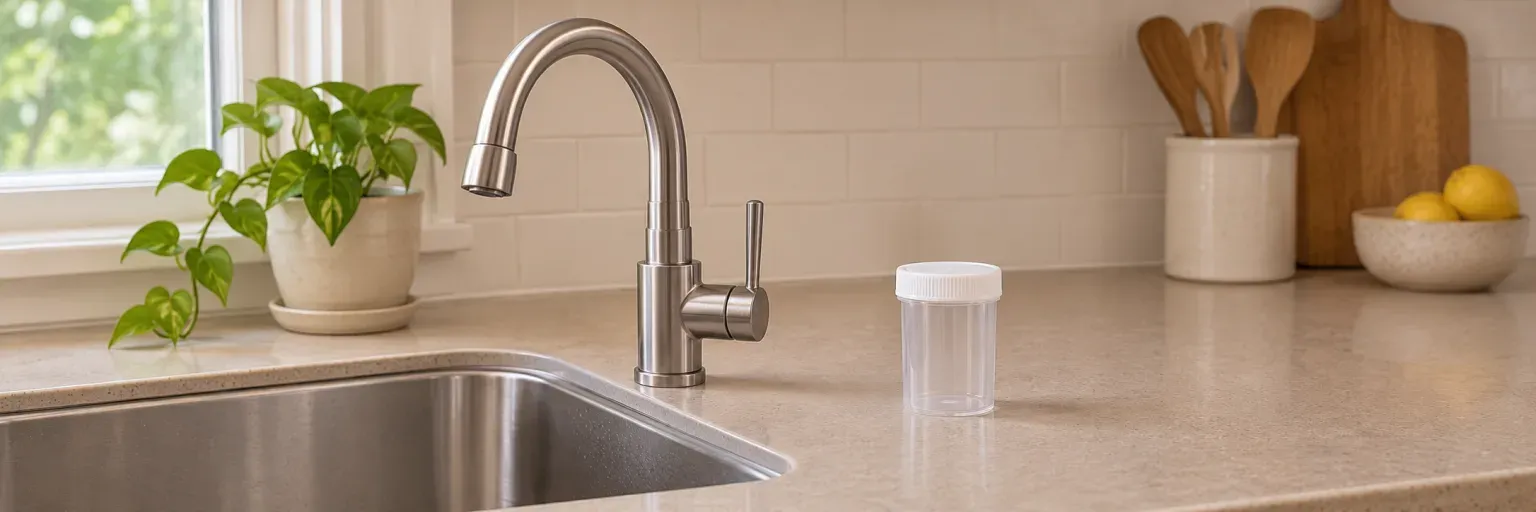
To test your tap water for lead, contact your water utility or a state-certified drinking-water laboratory before collecting anything. Explain which tap you use for drinking and why you are concerned. Request the correct container and written sampling instructions, follow them exactly, and arrange help interpreting the result. Clear water and a community water report cannot establish the lead level at your particular tap.
This guide is for a U.S. homeowner concerned about a service line—the pipe connecting a home to the water main—or household plumbing. Your next step is a short call to arrange the right sample, not an immediate filter purchase. EPA says you cannot see, taste, or smell lead dissolved in water. Its guidance, checked November 26, 2026, is the basis for the precautions below.
1. Identify who should help you arrange the test
For public water, begin with the utility. Ask whether it offers tap-water lead testing and whether it has information about your house’s service-line material. Gather any current notice and your address or account details for that conversation. The utility’s annual Consumer Confidence Report provides system-wide context; lead can also enter water through a residence’s plumbing, so that report does not replace a test at your tap.
If you use a private well, contact your state or local drinking-water or health authority for a certified laboratory and locally appropriate advice. Do not assume a nearby utility’s report describes your well. Tell the laboratory that lead is the specific concern rather than ordering an unspecified water-quality panel.
EPA directs consumers to state or local drinking-water authorities for certified laboratory lists. Confirm that the laboratory can test drinking water for lead and explain its collection and delivery requirements. Ask for the current fee and what it includes rather than relying on a national price as a quote.
2. Get the sampling plan in writing
Tell the utility or laboratory which faucet you use, whether there is an existing filter, and whether there has been recent plumbing or service-line work. Ask it to identify the intended sample point and whether the test is meant to examine water before or after treatment. Those are different questions; do not silently substitute one for the other.
Before scheduling collection, have the provider specify:
- The supplied bottle plus any handling restrictions.
- The exact faucet and whether filters or faucet attachments should remain in place.
- Any period without water use, any flushing instructions, and the collection order.
- The sample volume, labeling, storage, and delivery deadline.
- Who to contact when the directions cannot be followed.
Do not invent a waiting time or flush first from habit. Everyday exposure-reduction guidance and instructions for collecting a particular test sample are not interchangeable. If directions are missing or conflict, pause collection and consult the provider to resolve them. Do not remove plumbing or disturb a suspected lead pipe to obtain a sample.
3. Collect only as instructed and record exceptions
Use the provider’s container, not a household jar. Follow its instructions for collection, labeling, and transport. Keep a copy of the directions alongside the collection date, time, faucet location, and whether the sample was taken through a filter.
If someone uses water during a required no-use period, the wrong faucet is sampled, or delivery may be late, tell the laboratory what happened before relying on the result. Ask whether to restart or arrange a replacement sample. Do not conceal an exception simply to finish the kit.
4. Keep precautions separate from the test
EPA recommends cold water for drinking, cooking, and preparing baby formula, and states that boiling does not remove lead. Follow current utility and health-department instructions for your situation while arranging testing; do not wait for a home article to overrule an active notice.
If a filter is recommended, confirm that the exact product is certified for lead reduction and follow its installation, use, and cartridge-replacement directions. A generic filter label is not enough. EPA advises contacting the utility for locally appropriate flushing times; this guide intentionally does not prescribe one universal duration.
A water test does not diagnose a person’s exposure or health. Contact a healthcare professional about individual health concerns, particularly concerns involving children or pregnancy, rather than interpreting a water result as a medical test.
5. Arrange the result conversation before choosing equipment
Keep the complete report and sampling record. Ask the laboratory or local authority to explain the units, what the result establishes about that sample, and whether repeat or different-location sampling is appropriate. Do not treat a public-system regulatory action level as a personal safe-water threshold. EPA’s health goal for lead in drinking water is zero.
For the next step, use How to read a home water test report to organize that conversation. If further testing or treatment is recommended, How to plan home water testing and treatment helps keep the documented concern separate from a product proposal.
Questions to ask your laboratory or utility water-quality professional
- Which tap, container, water-use restrictions, filter configuration, and delivery deadline apply to the lead question I want this sample to answer?
- If I cannot follow one collection instruction, should I restart, and how should that exception be recorded on the sample paperwork?
- Who will explain this result alongside my service-line information and recommend any immediate precautions or further sampling before treatment is selected?
Sources
- U.S. Environmental Protection Agency, Basic Information about Lead in Drinking Water (updated June 18, 2026; checked November 26, 2026) — plumbing and service-line context, certified laboratories, testing, lead health goal, cold water, boiling, filters, and local flushing guidance.
Keep planning
Related water treatment guides
How to plan home water testing and treatment
A safe, step-by-step way to get the right water-quality information before choosing testing or a treatment system.
How to read a home water test report
A homeowner-friendly way to identify what a water test actually says, what it cannot answer, and what to ask before choosing a next step.
How much should home water treatment cost?
A scope-first guide to budgeting for water testing, filtration, softening, or another treatment system without mistaking a planning figure for a quote.