
Homeowner blog
A simple fall electrical safety check before indoor season
Before lamps, heaters, and holiday decorations get more use, take a quiet look at outlets, cords, and warning signs.
Published September 25, 2026
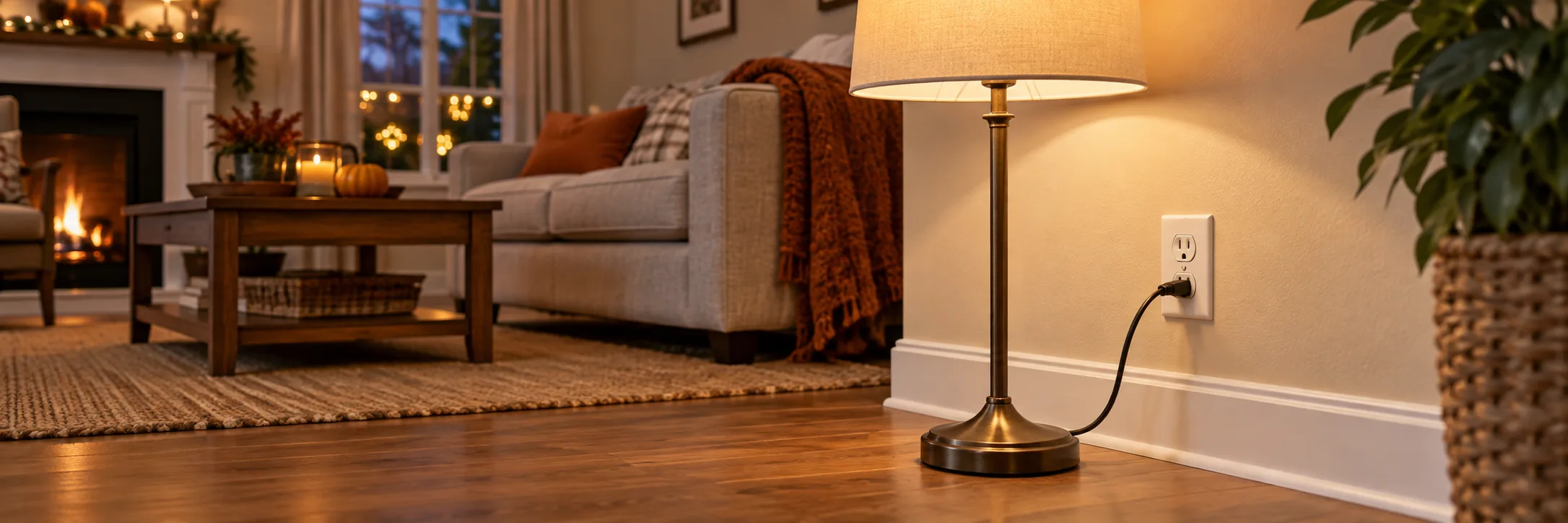
As days get shorter, homes rely more on indoor lighting and plug-in devices. This is a good moment for a visual check—not for opening panels or working on wiring.
Look for obvious cord and outlet problems
Check lamps, chargers, power strips, and visible extension cords for cracked insulation, loose plugs, scorch marks, or a hot smell. Replace damaged cords rather than taping them. Keep cords out from under rugs and away from doorways where they can be pinched or tripped over.
Use outlets as intended
Do not overload an outlet with stacked adapters or daisy-chained power strips. Larger appliances and portable heaters should go directly into a properly rated wall outlet, following the manufacturer’s instructions. Keep anything that produces heat away from curtains, bedding, and furniture.
Know when to stop and call an electrician
Flickering lights, a buzzing outlet, a breaker that trips repeatedly, a warm receptacle cover, or a burning odor need qualified attention. Do not keep resetting a breaker to make the symptom disappear. If you need help separating an urgent concern from a future project, read When to call an electrician.
Sources
Be ready for the conversation
3 questions to ask your qualified professional
- 1What condition did you observe, and what evidence supports that conclusion?
- 2What options fit this home, and what tradeoffs should I understand?
- 3What exactly is included and excluded from the written scope?
More from HomeFAQ
More homeowner notes
Fall is here: time to check your windows
A short, safe fall window check can help you spot drafts, moisture, worn weatherstripping, and operation issues before cold weather settles in.
A fall roof and gutter check from the ground
A few safe observations from ground level can help you spot drainage or roof concerns before wet weather arrives.
Before heating season: check your HVAC filter
A quick filter check is one of the simplest ways to support airflow before your heating system begins regular use.